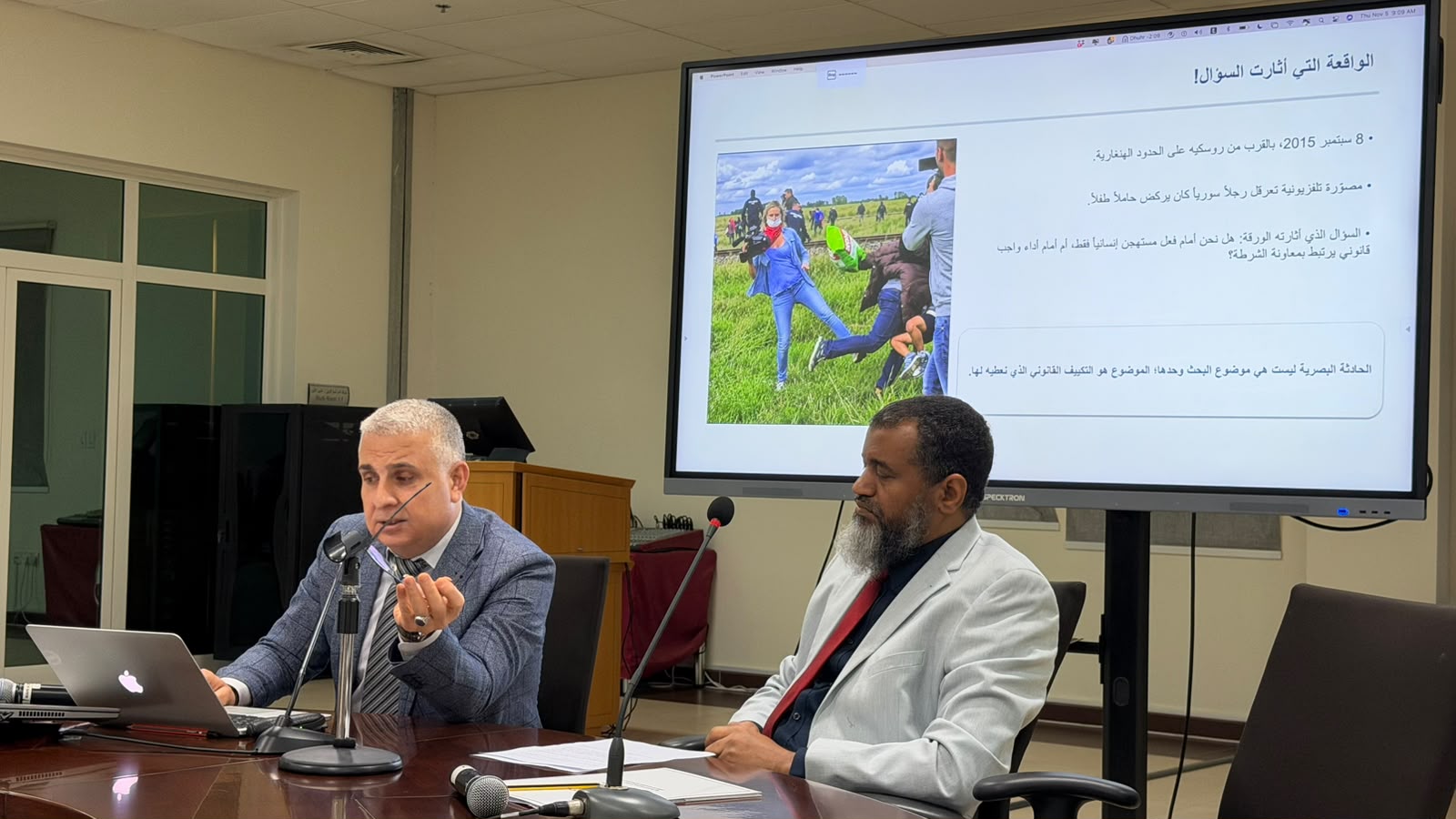
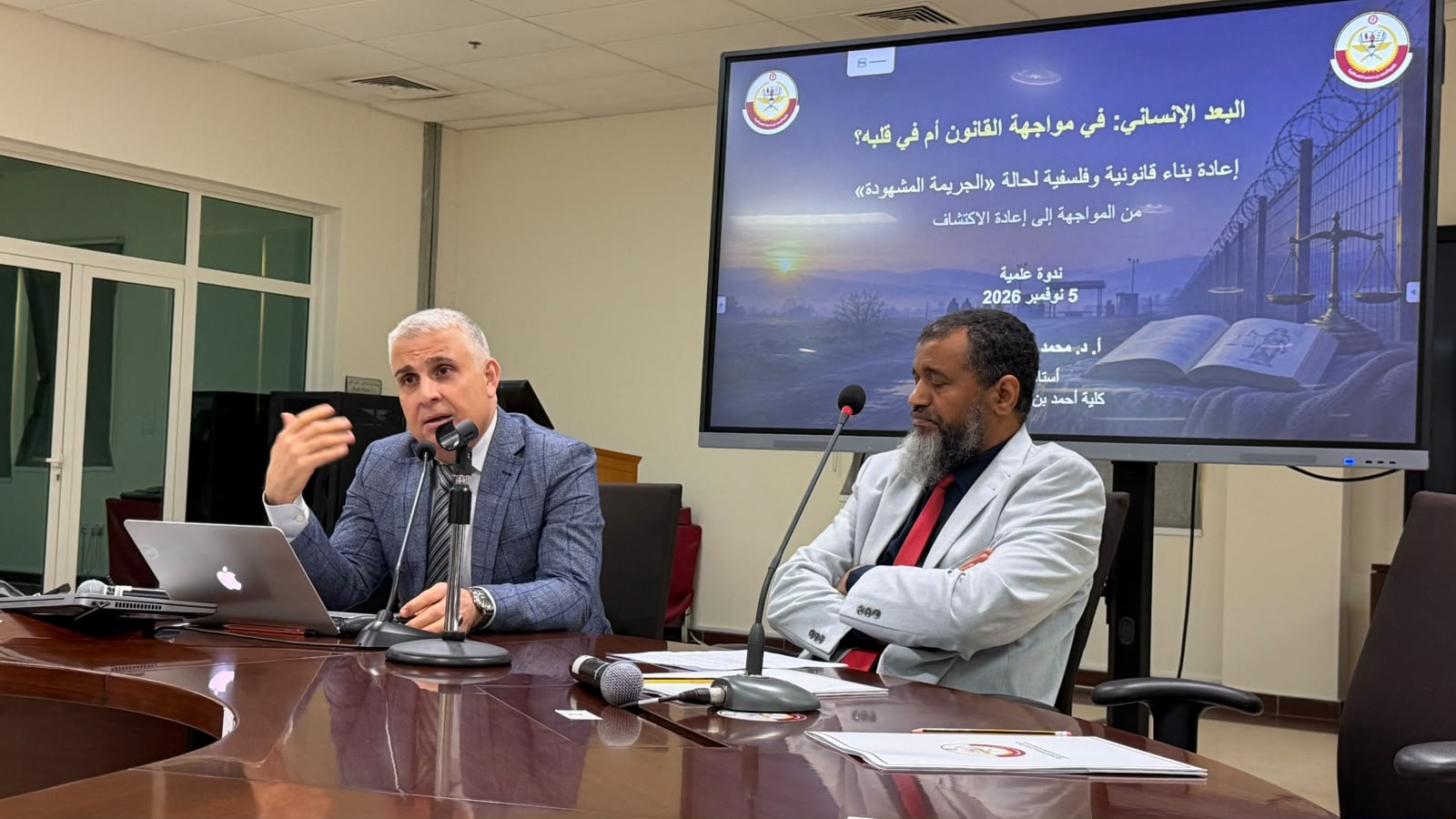
On Thursday, 5 November 2026, Ahmed Bin Mohammed Military College organized an academic seminar entitled “The Human Dimension: In Conflict with the Law or at Its Heart? A Legal and Philosophical Reconstruction of a Case Concerning Flagrante Delicto”.
Mohammed Irfan Al-Khatib, Professor of Law at the College, led the seminar. He examined an incident that had prompted wide debate about how the law should characterize the conduct in question, the extent of a private individual’s authority to assist law enforcement, and the relationship between applying the law and protecting individuals and their fundamental rights.
The seminar took as its starting point an incident that occurred at the Hungarian border in 2015. It raised several legal and philosophical questions: When does the law consider a person to have been caught in the act of committing an offence (in flagrante delicto)? May a private individual intervene or make an arrest to assist the police? How does an asylum seeker’s legal status affect the legal characterization of the incident? Are law and human values at odds, or have many of those values become part of the legal framework itself?
The seminar also examined the distinction between a criminal offence and a lesser infraction and how that distinction affects an individual’s authority to intervene. Other topics included whether the means used were necessary and proportionate, the legal protections afforded to children in their own right, and safeguards relating to asylum and non-refoulment under international and European law.
Professor Al-Khatib discussed the Hungarian Supreme Court’s 2018 ruling on the incident and explored the relationship between the wording of the law, justice, and values. Drawing on legal scholarship and principles of Islamic law, he considered the importance of taking account of the consequences of actions, remedying harm, and weighing benefits against harms.
The seminar concluded that applying the law requires more than reading the text in isolation. It involves identifying the applicable legal rule, understanding its scope and purpose, and acting through lawful, necessary, and proportionate means. This approach upholds the authority of the law while protecting human dignity and fundamental rights.
Participants took an active part in the discussion. Their questions and comments explored the legal, philosophical, and practical aspects of the topic and deepened the discussion of how the rule of law can be upheld while taking human considerations into account.